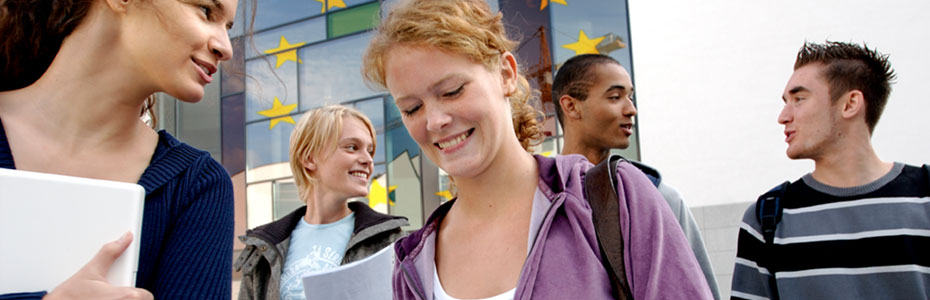
Oxford College of London

Study Graduate and Postgraduate courses at Highly Trusted College.

Harvard University

Harvard University, which celebrated its 375th anniversary in 2011

Washington University in St. Louis

Washington University in St. Louis (Washington University, Wash. U., or WUSTL) is a private research university located in suburban St. Louis, Missouri, United States. Founded in 1853, and named for George Washington

Edith Cowan University Western Australia

Edith Cowan is a multi-campus institution, offering undergraduate and postgraduate courses in Perth and Bunbury, Western Australia.

Showing posts with label World. Show all posts

Wednesday, April 3, 2013

WORLD WAR II NAVAJO CODE TALKER SPEAKING ON FEB. 28 AT ECU

ECU's mission is to foster a learning environment in which students,
faculty, staff and community interact to educate students for life.

FOR IMMEDIATE RELEASE

East Central University Communications and Marketing580-559-5650 or 405-812-1428 (cell)Navajo Code Talker Bill Toledo

A significant glimpse into World War II and Native American history can be experienced as Navajo Code Talker Bill Toledo will be in attendance to share his story during the Fifth Annual Louise Young Diversity Lecture on Feb. 28 at 7 p.m. at the Ataloa Theatre of the Hallie Brown Ford Fine Arts on the East Central University campus.

The lecture is free and open to the public.

During the early months of World War II, Japanese intelligence experts broke every code the United States forces devised. They were able to anticipate American actions at an alarming rate due to having plenty of fluent English speakers at their disposal.

The Japanese sabotaged messages and issued false commands which led to the ambush of Allied troops. As a result, complex codes were utilized, but sending and receiving these codes took hours of encryption and decryption.

Enter Phillip Johnston, a civilian living in California. Johnston, a son of a Protestant missionary, had the answer. He grew up on the Navajo reservation and was one of less than 30 outsiders fluent in their difficult language. Johnston realized that since it had no alphabet and was almost impossible to master without early exposure, the Navajo language had great potential to be an indecipherable code.

Johnston launched a Navajo Code Talker test program in early 1942 when the first 29 code talkers were recruited by Johnston.

The ingenious and effective code was created at Camp Pendleton. The codes originated as approximately 200 terms, growing to over 600 by war’s end. It could communicate in 20 seconds what took coding machines of the time 30 minutes to do. It consisted of native terms that were associated with the respective military terms they resembled such as the word ‘turtle’ meant ‘tank’ and a ‘dive-bomber’ was a chicken hawk.

Once trained these 29 Navajo Code talkers were sent to Marine divisions in the Pacific theater of World War II and quickly gained a reputation for their remarkable abilities. In the field, they were not allowed to write any part of the code down as a reference. They became living codes and, under heavy battle conditions, had to rapidly recall every word with precisions or risk hundreds or thousands of lives. In the battle of Iwo Jima, in the first 48 hours alone, they coded over 800 transmissions with accuracy. Their heroism was a critical part of victory in that pivotal conflict.

Mr. Toledo was a Navajo Code Talker for three years from 1942-45 and served in engagements, including the Battle of Bougainville in the British Solomon Islands and the battles for Guam and Iwo Jima.

While on the island of Guam, while filling in as a messenger, Toledo narrowly escaped sniper fire thanks to some quick footwork. His moves impressed some of his fellow Marines that they jokingly asked how his football career was like before the war.

On one occasion, while marching through the jungle, Toledo was mistaken for a Japanese soldier by fellow Marines and taken prisoner. After being taken back to headquarters at gunpoint, he was assigned a bodyguard to avoid future misunderstandings. To this day, he still gets calls to make sure he’s okay.

Dr. Louise Young is a graduate of Ada Public Schools and East Central University (B.A. in geography in 1969). She earned a master’s and doctorate from the University of Colorado. From 1971 to 1974, she was an instructor of geography at ECU. In 2008, Young established an endowed lectureship within the ECU Foundation with a goal to present an annual free lecture for students, faculty and community members on various aspects of diversity.

She retired as senior software engineer with Raytheon Company, where she worked for 34 years. In addition to her software engineering career, she has received numerous awards for her work in diversity, both inside and outside of corporate America, especially with regards to equal treatment of gay, lesbian, bisexual and transgender individuals. In 2003, she received the prestigious Raytheon Diversity Heroes Award from Raytheon CEO, Bill Swanson.

- # # # -


View the original article here

Friday, March 1, 2013

WORLD WAR II NAVAJO CODE TALKER SPEAKING ON FEB. 28 AT ECU

ECU's mission is to foster a learning environment in which students,
faculty, staff and community interact to educate students for life.

FOR IMMEDIATE RELEASE

East Central University Communications and Marketing580-559-5650 or 405-812-1428 (cell)Navajo Code Talker Bill Toledo

A significant glimpse into World War II and Native American history can be experienced as Navajo Code Talker Bill Toledo will be in attendance to share his story during the Fifth Annual Louise Young Diversity Lecture on Feb. 28 at 7 p.m. at the Ataloa Theatre of the Hallie Brown Ford Fine Arts on the East Central University campus.

The lecture is free and open to the public.

During the early months of World War II, Japanese intelligence experts broke every code the United States forces devised. They were able to anticipate American actions at an alarming rate due to having plenty of fluent English speakers at their disposal.

The Japanese sabotaged messages and issued false commands which led to the ambush of Allied troops. As a result, complex codes were utilized, but sending and receiving these codes took hours of encryption and decryption.

Enter Phillip Johnston, a civilian living in California. Johnston, a son of a Protestant missionary, had the answer. He grew up on the Navajo reservation and was one of less than 30 outsiders fluent in their difficult language. Johnston realized that since it had no alphabet and was almost impossible to master without early exposure, the Navajo language had great potential to be an indecipherable code.

Johnston launched a Navajo Code Talker test program in early 1942 when the first 29 code talkers were recruited by Johnston.

The ingenious and effective code was created at Camp Pendleton. The codes originated as approximately 200 terms, growing to over 600 by war’s end. It could communicate in 20 seconds what took coding machines of the time 30 minutes to do. It consisted of native terms that were associated with the respective military terms they resembled such as the word ‘turtle’ meant ‘tank’ and a ‘dive-bomber’ was a chicken hawk.

Once trained these 29 Navajo Code talkers were sent to Marine divisions in the Pacific theater of World War II and quickly gained a reputation for their remarkable abilities. In the field, they were not allowed to write any part of the code down as a reference. They became living codes and, under heavy battle conditions, had to rapidly recall every word with precisions or risk hundreds or thousands of lives. In the battle of Iwo Jima, in the first 48 hours alone, they coded over 800 transmissions with accuracy. Their heroism was a critical part of victory in that pivotal conflict.

Mr. Toledo was a Navajo Code Talker for three years from 1942-45 and served in engagements, including the Battle of Bougainville in the British Solomon Islands and the battles for Guam and Iwo Jima.

While on the island of Guam, while filling in as a messenger, Toledo narrowly escaped sniper fire thanks to some quick footwork. His moves impressed some of his fellow Marines that they jokingly asked how his football career was like before the war.

On one occasion, while marching through the jungle, Toledo was mistaken for a Japanese soldier by fellow Marines and taken prisoner. After being taken back to headquarters at gunpoint, he was assigned a bodyguard to avoid future misunderstandings. To this day, he still gets calls to make sure he’s okay.

Dr. Louise Young is a graduate of Ada Public Schools and East Central University (B.A. in geography in 1969). She earned a master’s and doctorate from the University of Colorado. From 1971 to 1974, she was an instructor of geography at ECU. In 2008, Young established an endowed lectureship within the ECU Foundation with a goal to present an annual free lecture for students, faculty and community members on various aspects of diversity.

She retired as senior software engineer with Raytheon Company, where she worked for 34 years. In addition to her software engineering career, she has received numerous awards for her work in diversity, both inside and outside of corporate America, especially with regards to equal treatment of gay, lesbian, bisexual and transgender individuals. In 2003, she received the prestigious Raytheon Diversity Heroes Award from Raytheon CEO, Bill Swanson.

- # # # -


View the original article here

Sunday, February 24, 2013

WORLD WAR II NAVAJO CODE TALKER SPEAKING ON FEB. 28 AT ECU

ECU's mission is to foster a learning environment in which students,
faculty, staff and community interact to educate students for life.

FOR IMMEDIATE RELEASE

East Central University Communications and Marketing580-559-5650 or 405-812-1428 (cell)Navajo Code Talker Bill Toledo

A significant glimpse into World War II and Native American history can be experienced as Navajo Code Talker Bill Toledo will be in attendance to share his story during the Fifth Annual Louise Young Diversity Lecture on Feb. 28 at 7 p.m. at the Ataloa Theatre of the Hallie Brown Ford Fine Arts on the East Central University campus.

The lecture is free and open to the public.

During the early months of World War II, Japanese intelligence experts broke every code the United States forces devised. They were able to anticipate American actions at an alarming rate due to having plenty of fluent English speakers at their disposal.

The Japanese sabotaged messages and issued false commands which led to the ambush of Allied troops. As a result, complex codes were utilized, but sending and receiving these codes took hours of encryption and decryption.

Enter Phillip Johnston, a civilian living in California. Johnston, a son of a Protestant missionary, had the answer. He grew up on the Navajo reservation and was one of less than 30 outsiders fluent in their difficult language. Johnston realized that since it had no alphabet and was almost impossible to master without early exposure, the Navajo language had great potential to be an indecipherable code.

Johnston launched a Navajo Code Talker test program in early 1942 when the first 29 code talkers were recruited by Johnston.

The ingenious and effective code was created at Camp Pendleton. The codes originated as approximately 200 terms, growing to over 600 by war’s end. It could communicate in 20 seconds what took coding machines of the time 30 minutes to do. It consisted of native terms that were associated with the respective military terms they resembled such as the word ‘turtle’ meant ‘tank’ and a ‘dive-bomber’ was a chicken hawk.

Once trained these 29 Navajo Code talkers were sent to Marine divisions in the Pacific theater of World War II and quickly gained a reputation for their remarkable abilities. In the field, they were not allowed to write any part of the code down as a reference. They became living codes and, under heavy battle conditions, had to rapidly recall every word with precisions or risk hundreds or thousands of lives. In the battle of Iwo Jima, in the first 48 hours alone, they coded over 800 transmissions with accuracy. Their heroism was a critical part of victory in that pivotal conflict.

Mr. Toledo was a Navajo Code Talker for three years from 1942-45 and served in engagements, including the Battle of Bougainville in the British Solomon Islands and the battles for Guam and Iwo Jima.

While on the island of Guam, while filling in as a messenger, Toledo narrowly escaped sniper fire thanks to some quick footwork. His moves impressed some of his fellow Marines that they jokingly asked how his football career was like before the war.

On one occasion, while marching through the jungle, Toledo was mistaken for a Japanese soldier by fellow Marines and taken prisoner. After being taken back to headquarters at gunpoint, he was assigned a bodyguard to avoid future misunderstandings. To this day, he still gets calls to make sure he’s okay.

Dr. Louise Young is a graduate of Ada Public Schools and East Central University (B.A. in geography in 1969). She earned a master’s and doctorate from the University of Colorado. From 1971 to 1974, she was an instructor of geography at ECU. In 2008, Young established an endowed lectureship within the ECU Foundation with a goal to present an annual free lecture for students, faculty and community members on various aspects of diversity.

She retired as senior software engineer with Raytheon Company, where she worked for 34 years. In addition to her software engineering career, she has received numerous awards for her work in diversity, both inside and outside of corporate America, especially with regards to equal treatment of gay, lesbian, bisexual and transgender individuals. In 2003, she received the prestigious Raytheon Diversity Heroes Award from Raytheon CEO, Bill Swanson.

- # # # -


View the original article here

Tuesday, February 12, 2013

WORLD WAR II NAVAJO CODE TALKER SPEAKING ON FEB. 28 AT ECU

ECU's mission is to foster a learning environment in which students,
faculty, staff and community interact to educate students for life.

FOR IMMEDIATE RELEASE

East Central University Communications and Marketing580-559-5650 or 405-812-1428 (cell)Navajo Code Talker Bill Toledo

A significant glimpse into World War II and Native American history can be experienced as Navajo Code Talker Bill Toledo will be in attendance to share his story during the Fifth Annual Louise Young Diversity Lecture on Feb. 28 at 7 p.m. at the Ataloa Theatre of the Hallie Brown Ford Fine Arts on the East Central University campus.

The lecture is free and open to the public.

During the early months of World War II, Japanese intelligence experts broke every code the United States forces devised. They were able to anticipate American actions at an alarming rate due to having plenty of fluent English speakers at their disposal.

The Japanese sabotaged messages and issued false commands which led to the ambush of Allied troops. As a result, complex codes were utilized, but sending and receiving these codes took hours of encryption and decryption.

Enter Phillip Johnston, a civilian living in California. Johnston, a son of a Protestant missionary, had the answer. He grew up on the Navajo reservation and was one of less than 30 outsiders fluent in their difficult language. Johnston realized that since it had no alphabet and was almost impossible to master without early exposure, the Navajo language had great potential to be an indecipherable code.

Johnston launched a Navajo Code Talker test program in early 1942 when the first 29 code talkers were recruited by Johnston.

The ingenious and effective code was created at Camp Pendleton. The codes originated as approximately 200 terms, growing to over 600 by war’s end. It could communicate in 20 seconds what took coding machines of the time 30 minutes to do. It consisted of native terms that were associated with the respective military terms they resembled such as the word ‘turtle’ meant ‘tank’ and a ‘dive-bomber’ was a chicken hawk.

Once trained these 29 Navajo Code talkers were sent to Marine divisions in the Pacific theater of World War II and quickly gained a reputation for their remarkable abilities. In the field, they were not allowed to write any part of the code down as a reference. They became living codes and, under heavy battle conditions, had to rapidly recall every word with precisions or risk hundreds or thousands of lives. In the battle of Iwo Jima, in the first 48 hours alone, they coded over 800 transmissions with accuracy. Their heroism was a critical part of victory in that pivotal conflict.

Mr. Toledo was a Navajo Code Talker for three years from 1942-45 and served in engagements, including the Battle of Bougainville in the British Solomon Islands and the battles for Guam and Iwo Jima.

While on the island of Guam, while filling in as a messenger, Toledo narrowly escaped sniper fire thanks to some quick footwork. His moves impressed some of his fellow Marines that they jokingly asked how his football career was like before the war.

On one occasion, while marching through the jungle, Toledo was mistaken for a Japanese soldier by fellow Marines and taken prisoner. After being taken back to headquarters at gunpoint, he was assigned a bodyguard to avoid future misunderstandings. To this day, he still gets calls to make sure he’s okay.

Dr. Louise Young is a graduate of Ada Public Schools and East Central University (B.A. in geography in 1969). She earned a master’s and doctorate from the University of Colorado. From 1971 to 1974, she was an instructor of geography at ECU. In 2008, Young established an endowed lectureship within the ECU Foundation with a goal to present an annual free lecture for students, faculty and community members on various aspects of diversity.

She retired as senior software engineer with Raytheon Company, where she worked for 34 years. In addition to her software engineering career, she has received numerous awards for her work in diversity, both inside and outside of corporate America, especially with regards to equal treatment of gay, lesbian, bisexual and transgender individuals. In 2003, she received the prestigious Raytheon Diversity Heroes Award from Raytheon CEO, Bill Swanson.

- # # # -


View the original article here

Saturday, February 2, 2013

WORLD WAR II NAVAJO CODE TALKER SPEAKING ON FEB. 28 AT ECU

ECU's mission is to foster a learning environment in which students,
faculty, staff and community interact to educate students for life.

FOR IMMEDIATE RELEASE

East Central University Communications and Marketing580-559-5650 or 405-812-1428 (cell)Navajo Code Talker Bill Toledo

A significant glimpse into World War II and Native American history can be experienced as Navajo Code Talker Bill Toledo will be in attendance to share his story during the Fifth Annual Louise Young Diversity Lecture on Feb. 28 at 7 p.m. at the Ataloa Theatre of the Hallie Brown Ford Fine Arts on the East Central University campus.

The lecture is free and open to the public.

During the early months of World War II, Japanese intelligence experts broke every code the United States forces devised. They were able to anticipate American actions at an alarming rate due to having plenty of fluent English speakers at their disposal.

The Japanese sabotaged messages and issued false commands which led to the ambush of Allied troops. As a result, complex codes were utilized, but sending and receiving these codes took hours of encryption and decryption.

Enter Phillip Johnston, a civilian living in California. Johnston, a son of a Protestant missionary, had the answer. He grew up on the Navajo reservation and was one of less than 30 outsiders fluent in their difficult language. Johnston realized that since it had no alphabet and was almost impossible to master without early exposure, the Navajo language had great potential to be an indecipherable code.

Johnston launched a Navajo Code Talker test program in early 1942 when the first 29 code talkers were recruited by Johnston.

The ingenious and effective code was created at Camp Pendleton. The codes originated as approximately 200 terms, growing to over 600 by war’s end. It could communicate in 20 seconds what took coding machines of the time 30 minutes to do. It consisted of native terms that were associated with the respective military terms they resembled such as the word ‘turtle’ meant ‘tank’ and a ‘dive-bomber’ was a chicken hawk.

Once trained these 29 Navajo Code talkers were sent to Marine divisions in the Pacific theater of World War II and quickly gained a reputation for their remarkable abilities. In the field, they were not allowed to write any part of the code down as a reference. They became living codes and, under heavy battle conditions, had to rapidly recall every word with precisions or risk hundreds or thousands of lives. In the battle of Iwo Jima, in the first 48 hours alone, they coded over 800 transmissions with accuracy. Their heroism was a critical part of victory in that pivotal conflict.

Mr. Toledo was a Navajo Code Talker for three years from 1942-45 and served in engagements, including the Battle of Bougainville in the British Solomon Islands and the battles for Guam and Iwo Jima.

While on the island of Guam, while filling in as a messenger, Toledo narrowly escaped sniper fire thanks to some quick footwork. His moves impressed some of his fellow Marines that they jokingly asked how his football career was like before the war.

On one occasion, while marching through the jungle, Toledo was mistaken for a Japanese soldier by fellow Marines and taken prisoner. After being taken back to headquarters at gunpoint, he was assigned a bodyguard to avoid future misunderstandings. To this day, he still gets calls to make sure he’s okay.

Dr. Louise Young is a graduate of Ada Public Schools and East Central University (B.A. in geography in 1969). She earned a master’s and doctorate from the University of Colorado. From 1971 to 1974, she was an instructor of geography at ECU. In 2008, Young established an endowed lectureship within the ECU Foundation with a goal to present an annual free lecture for students, faculty and community members on various aspects of diversity.

She retired as senior software engineer with Raytheon Company, where she worked for 34 years. In addition to her software engineering career, she has received numerous awards for her work in diversity, both inside and outside of corporate America, especially with regards to equal treatment of gay, lesbian, bisexual and transgender individuals. In 2003, she received the prestigious Raytheon Diversity Heroes Award from Raytheon CEO, Bill Swanson.

- # # # -


View the original article here

Friday, January 25, 2013

WORLD WAR II NAVAJO CODE TALKER SPEAKING ON FEB. 28 AT ECU

ECU's mission is to foster a learning environment in which students,
faculty, staff and community interact to educate students for life.


FOR IMMEDIATE RELEASE

East Central University Communications and Marketing580-559-5650 or 405-812-1428 (cell)

A significant glimpse into World War II and Native American history can be experienced as Navajo Code Talker Bill Toledo will be in attendance to share his story during the Fifth Annual Louise Young Diversity Lecture on Feb. 28 at 7 p.m. at the Ataloa Theatre of the Hallie Brown Ford Fine Arts on the East Central University campus.


The lecture is free and open to the public.


During the early months of World War II, Japanese intelligence experts broke every code the United States forces devised. They were able to anticipate American actions at an alarming rate due to having plenty of fluent English speakers at their disposal.


The Japanese sabotaged messages and issued false commands which led to the ambush of Allied troops. As a result, complex codes were utilized, but sending and receiving these codes took hours of encryption and decryption.


Enter Phillip Johnston, a civilian living in California. Johnston, a son of a Protestant missionary, had the answer. He grew up on the Navajo reservation and was one of less than 30 outsiders fluent in their difficult language. Johnston realized that since it had no alphabet and was almost impossible to master without early exposure, the Navajo language had great potential to be an indecipherable code.


Johnston launched a Navajo Code Talker test program in early 1942 when the first 29 code talkers were recruited by Johnston.


The ingenious and effective code was created at Camp Pendleton. The codes originated as approximately 200 terms, growing to over 600 by war’s end. It could communicate in 20 seconds what took coding machines of the time 30 minutes to do. It consisted of native terms that were associated with the respective military terms they resembled such as the word ‘turtle’ meant ‘tank’ and a ‘dive-bomber’ was a chicken hawk.


Once trained these 29 Navajo Code talkers were sent to Marine divisions in the Pacific theater of World War II and quickly gained a reputation for their remarkable abilities. In the field, they were not allowed to write any part of the code down as a reference. They became living codes and, under heavy battle conditions, had to rapidly recall every word with precisions or risk hundreds or thousands of lives. In the battle of Iwo Jima, in the first 48 hours alone, they coded over 800 transmissions with accuracy. Their heroism was a critical part of victory in that pivotal conflict.


Mr. Toledo was a Navajo Code Talker for three years from 1942-45 and served in engagements, including the Battle of Bougainville in the British Solomon Islands and the battles for Guam and Iwo Jima.


While on the island of Guam, while filling in as a messenger, Toledo narrowly escaped sniper fire thanks to some quick footwork. His moves impressed some of his fellow Marines that they jokingly asked how his football career was like before the war.


On one occasion, while marching through the jungle, Toledo was mistaken for a Japanese soldier by fellow Marines and taken prisoner. After being taken back to headquarters at gunpoint, he was assigned a bodyguard to avoid future misunderstandings. To this day, he still gets calls to make sure he’s okay.


Dr. Louise Young is a graduate of Ada Public Schools and East Central University (B.A. in geography in 1969). She earned a master’s and doctorate from the University of Colorado. From 1971 to 1974, she was an instructor of geography at ECU. In 2008, Young established an endowed lectureship within the ECU Foundation with a goal to present an annual free lecture for students, faculty and community members on various aspects of diversity.


She retired as senior software engineer with Raytheon Company, where she worked for 34 years. In addition to her software engineering career, she has received numerous awards for her work in diversity, both inside and outside of corporate America, especially with regards to equal treatment of gay, lesbian, bisexual and transgender individuals. In 2003, she received the prestigious Raytheon Diversity Heroes Award from Raytheon CEO, Bill Swanson.


- # # # -


View the original article here

Virtue and Vice: The World of Lizbeth Anderson

Virtue and Vice: The World of Lizbeth Anderson - Press Releases Click here or hit the Enter key on your keyboard to go to our Text Only Site. Eastern's Mission   Search   The Office ofUniversity Relations Virtue and Vice: The World of Lizbeth Anderson Posted by Dwight Bachman on January 22, 2013 11:17 AM

Written by Christopher J. Herman


Akus Image by Liz Anderson.jpgWillimantic, Conn. - Eastern Connecticut State University is hosting "Virtue and Vice: The World of Lizbeth Anderson" in the Akus Gallery through Feb. 28. A reception will take place on Jan. 31 from 5-7 p.m.

Anderson is a mixed-media artist, tattooer and art historian.
She works in a variety of media including paint, beeswax, collage, techniques of printmaking and skin. She also teaches historical painting techniques focused on the methods of the medieval and Renaissance Italian masters. She shows and sells her artwork at various venues.
 Anderson has traveled extensively in Italy and has studied the work and culture of 14th century Tuscan painters, as well as Baroque Italian sculpture and architecture. She has an acute interest in skin, anatomy and the history of tattooing. "Beeswax became a way for me to explore metaphorically the physicality of the body without being a traditionally figurative painter," said Anderson.  "Its luminous, visceral and literally alchemical properties became carriers for the content of my work. Ultimately, the intersection of the physical body and the spirit, of instinct and intellect, of virtue and vice, has been the motivation for me to make work for as long as I can remember."

The Akus Gallery is located in the lower level of Shafer Hall at the corner of Windham and Valley Streets in Willimantic.  Gallery hours are 11 a.m.-5 p.m. Tuesdays and Wednesdays, 1-7 p.m. on Thursday and 2-5 p.m. on Saturdays and Sundays.

For more information, call (860) 465-4659 or visit www.easternct.edu/akusgallery. 
For more information on Anderson's work, visit www.lizbethanderson.net.

Categories: Akus Gallery Tags: Virtue and Vice: The World of Lizbeth Anderson Newsroom Home Subscribe to Eastern's Newsfeed Subscribe to Eastern's Newsfeed January 2013 Sun Mon Tue Wed Thu Fri Sat     1 2 3 4 5 6 7 8 9 10 11 12 13 14 15 16 17 18 19 20 21 22 23 24 25 26 27 28 29 30 31     Monthly Archives January 2013 (10) December 2012 (11) November 2012 (12) October 2012 (36) September 2012 (22) August 2012 (6) July 2012 (2) June 2012 (19) May 2012 (23) April 2012 (24) March 2012 (9) February 2012 (9) January 2012 (10) December 2011 (7) November 2011 (24) October 2011 (24) September 2011 (26) August 2011 (8) July 2011 (7) June 2011 (15) May 2011 (12) April 2011 (37) March 2011 (20) February 2011 (18) January 2011 (7) December 2010 (10) November 2010 (16) October 2010 (19) September 2010 (14) August 2010 (10) July 2010 (6) June 2010 (4) May 2010 (5) April 2010 (34) March 2010 (19) February 2010 (21) January 2010 (11) December 2009 (6) November 2009 (13) October 2009 (24) September 2009 (23) August 2009 (6) July 2009 (9) June 2009 (5) May 2009 (17) April 2009 (15) March 2009 (22) February 2009 (19) January 2009 (14) Categories Academic Departments (3) Academic Affairs (52) Biology (37) Business Administration (44) Communication (46) Computer Science (23) Continuing Education (23) Economics (26) Education (53) English (72) Environmental Earth Science (36) Graduate Division (17) HPE (40) History (38) Math (28) Performing Arts (121) Physical Science (29) Political Science, Philosophy and Geography (52) Psychology (32) Sociology, Anthropology and Social Work (45) Visual Arts (57) World Languages and Cultures (49) Administrative and Other Departments (5) Academic Services Center (17) Accessability Services (16) Admissions (26) Advising (20) Akus Gallery (27) Alumni Affairs (14) Athletics (20) Awards (70) CECE/CFDRC (23) Campus Ministry/Religious (15) Careers (17) Community Service/Service Learning (88) Facilities (24) Financial Aid (17) First Year Program (13) Fiscal Affairs (11) Foundation (10) Grants (14) Health Services (18) Honors Program (12) Human Resources (16) Information Technology (15) Institute for Sustainable Energy (31) Institutional Advancement (19) Intercultural Center (50) Library (20) Media Services (14) Office of the President (33) Police/Campus Safety (18) SGA/Student Clubs (41) Student Affairs (45) Veterans (20) Women's Center (48) Housing (9) University Relations (14) Women's and Gender Studies (3) Powered by Movable Type 83 Windham Street, Willimantic, Connecticut 06226 USA
Contact Us | University Disclaimer | ECSU Home

View the original article here

Tuesday, November 27, 2012

BU alumnus shares World War II memories

NEWS RELEASE
Monday, Nov. 12, 2012
Contact: Steve Rottinghaus, Baker University public relations director, (785) 594-8330 or This e-mail address is being protected from spambots. You need JavaScript enabled to view it

Baldwin City, Kan. — Seventy years ago this fall — a year after the attack on Pearl Harbor by the Japanese — Don Nutt enlisted with the U.S. Army Ordnance Corps two weeks after getting married and while working on the construction of a Phillips 66 refinery in Pampa, Texas.

"A buddy of mine tried to get in the Air Force and Merchant Marines, but he had an injured right hand," said Nutt, 91 and a Baldwin City resident since 1946. "I wasn't going to go if he didn't go. At the end of September, they froze all enlistments and that's when we decided to sign up for the ordnance."

During World War II, the Army Ordnance expanded the Corps' responsibilities to include production, acquisition, distribution and training missions for the Army Ground Forces, the Army Air Force, and, in, some cases, the Navy. A month before Nutt enlisted, the Ordnance Corps assumed responsibility for procurement and maintenance of all wheeled and motored vehicles. He served from 1942 to 1946 before coming to Baldwin City to attend Baker. Originally from Paola, he and his wife, Ruth Ann, who recently celebrated their 70th wedding anniversary, have lived in Baldwin ever since. Don worked for Baldwin State Bank for 40 years until retiring in 1990 and served 19 years as a member of Baker's Board of Trustees.

During World War II, Nutt was stationed in Maryland, Florida and Alabama, training in the maintenance of motorcycles and Sherman tanks before heading overseas to Avon, France, and earning his highest rank as T5 (Technician Fifth Class). He also was an electrician and worked on carburetors.

Nutt remembers May 8, 1945, when the end of World War II was announced with the Victory in Europe Day (V-E Day). He was returning home on an overseas furlough.

"When we stopped at the train station in St. Louis they announced that the Allies had accepted the surrender of Nazi Germany," he said.

Nutt admires the dedication of the U.S. soldiers who served during World War II and the more than 400,000 who died for their country.

"You respect the sacrifices they made," said Nutt, passionate about his country and a member of the American Legion for more than 60 years.

Nutt's wife organized a trip for him and his sons, David, Mark and Michael, to travel to the World War II Memorial in Washington, D.C., on Memorial Day 2011.

"I placed a wreath at the Memorial, which was quite an honor," Don said. "I had a wonderful time with my sons. All the people there treated the World War II veterans like we were kings."

###
Baker is committed to assuring student learning, and developing confident, competent and responsible contributors to society.


View the original article here